
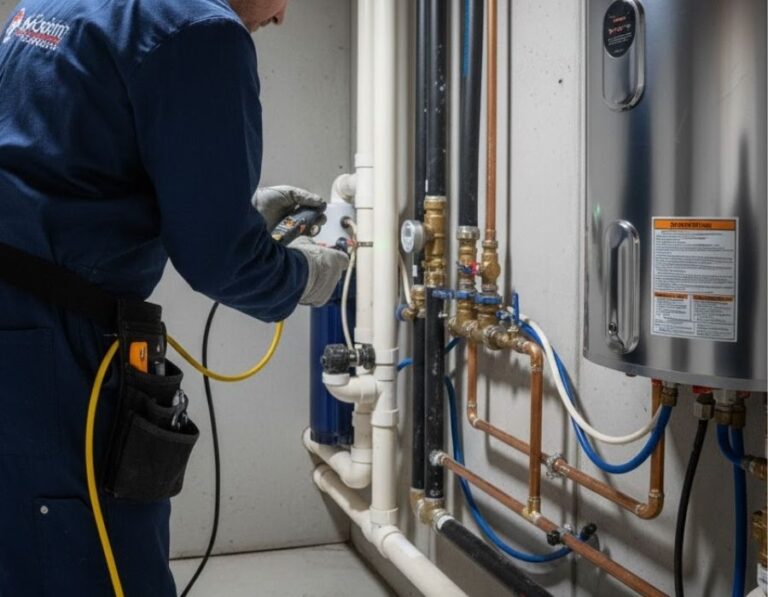
A gas leak in your home is one of the few plumbing problems that can turn dangerous fast. Most Aurora homeowners assume they’ll always smell it — but not every leak announces itself with the classic rotten-egg odor. Some show up as a hissing sound behind a wall, a dead patch of grass near your gas line, or a gas bill that jumped for no clear reason.
Here’s how to recognize the warning signs early, what to do the moment you suspect a leak, and when to call a licensed plumber for gas line repair in Aurora, CO.
Quick Answer
The most common signs of a gas leak are a rotten-egg smell, a hissing or whistling sound near pipes, dead houseplants or brown patches of grass, and a higher-than-normal gas bill. If you notice any of these, leave the house immediately, avoid switches or phones, and call your gas utility and a licensed plumber from outside.
In This Article
Common Signs of a Gas Leak
Not every gas leak looks the same, but these are the signs I check for most often on service calls:
- Rotten-egg or sulfur smell — natural gas is odorless on its own; utilities add a chemical called mercaptan so leaks are easier to notice.
- Hissing or whistling sound near a pipe, meter, or appliance connection.
- Dead houseplants or browning grass in a specific patch of your yard, often near a buried line.
- Bubbling in standing water or mud outside, near where a line runs underground.
- A rising gas bill with no change in usage — gas escaping the line still gets metered.
- A yellow or orange pilot flame instead of blue, which can also signal incomplete combustion.
If you notice more than one of these at once, treat it as a real leak, not a coincidence.
Physical Symptoms to Watch For
Gas leaks reduce the oxygen in a room, which can cause symptoms before you ever notice a smell:
- Headaches or dizziness
- Nausea or loss of appetite
- Fatigue that improves once you leave the house
- Irritated eyes, nose, or throat
- Trouble breathing or chest tightness
Pets often react before people do — watch for lethargy, vomiting, or unusual behaviour in dogs and cats.
Why Aurora Homes Are at Risk
Colorado’s freeze-thaw cycles are harder on buried gas lines than most homeowners realize. As the ground freezes and thaws throughout the winter, soil shifts, putting stress on fittings and joints — a known cause of gas line stress in colder climates. Older neighborhoods in and around Original Aurora, with decades-old gas lines, are especially worth a proactive check before winter.
What to Do If You Suspect a Leak
Do this immediately:
- Leave the house right away and take everyone, including pets, with you.
- Don’t flip light switches, use your phone inside, or start a car in an attached garage.
- Once outside, call your gas utility to report the leak.
- Call a licensed plumber for gas line repair in Aurora, CO, to locate and fix the source.
- Don’t go back inside until the utility company or a professional confirms it’s safe.
Don’t wait if symptoms are severe. If anyone is having trouble breathing or chest pain, call 911 first, then evacuate.
Suspect a gas leak? Don’t wait — call a licensed Aurora plumber now.
Gas Line Repair vs. Replacement
Once the utility company confirms it’s safe to return, the next question is whether the line needs a repair or a full replacement. Here’s how we make that call:
| Situation | Repair | Replacement |
|---|---|---|
| Single pinhole leak or loose fitting | ✔ | |
| Widespread corrosion along the line | ✔ | |
| Line is decades old, original to the home | ✔ | |
| New appliance or fixture needs a line run | New install |
If you’re planning a kitchen upgrade or a new gas range, we also handle new gas line installation in Aurora, CO alongside repair work.
Frequently Asked Questions
What does a gas leak smell like?
Most people describe it as rotten eggs or sulfur. That smell comes from mercaptan, a chemical utilities add to naturally odorless gas so leaks are easier to detect.
Can a gas leak make you sick without a smell?
Yes. Small leaks can cause headaches, dizziness, or fatigue with little to no odor, especially if your sense of smell is diminished. A gas detector adds a layer of protection smell alone can’t.
Is it safe to stay in the house if I smell gas?
No. Leave immediately, avoid switches and phones inside, and call your gas utility and a plumber once you’re outside and at a safe distance.
How do I test for a gas leak myself?
Mix dish soap and water, apply it along visible pipe joints, and watch for bubbles. This only works on accessible lines — buried or in-wall leaks need a professional inspection.
How much does gas line repair cost?
Cost depends on the leak’s location and severity. We provide a free estimate and upfront pricing before any work begins — call for a quote specific to your home.
Do I need gas line repair or full replacement?
Small, isolated leaks are usually repairable. Widespread corrosion or an aging original line often calls for replacement — we’ll walk you through the difference during inspection.
Licensed, insured, and ready to respond fast across Aurora, CO.
About the Author
Grig Plumbing is a licensed and insured plumbing company serving Aurora, CO and the greater Denver metro area, specializing in gas line repair and installation, water heater services, and emergency plumbing.