If you live in Denver, your water is hard — full stop. Calcium and magnesium ride along as snowmelt travels down from the Rockies, and by the time it reaches your tap, it’s carrying enough mineral content to slowly choke your pipes and cook your water heater from the inside. It’s one of the most common issues we see in plumbing in Denver, CO, and most homeowners don’t notice until the damage is already done.
In This Article
Why Denver’s Water Is So Hard
Denver Water pulls most of its supply from snowmelt collected at the Chatfield, Antero, and Dillon reservoirs. That water starts soft, but as it travels through limestone and gypsum formations on its way down from the mountains, it picks up dissolved calcium and magnesium. By the time it reaches your home, the city-wide average lands around 7.8 grains per gallon (GPG) — classified as “hard” — and some pockets of the metro area test well into the “very hard” range.
Hardness also isn’t constant year-round. It tends to climb during spring runoff, when higher water volume through the mountains carries more dissolved sediment and minerals into the treatment system. That seasonal spike is exactly when plumbers see the most scale-related service calls.
Because hardness minerals can’t be economically stripped out at the municipal treatment level, every home in Denver plumbing systems is dealing with the same baseline mineral load — the only question is how much of it gets left behind inside your pipes.
Warning Signs You Have a Hard Water Problem
Hard water damage builds slowly, so most homeowners miss the early signals. Watch for:
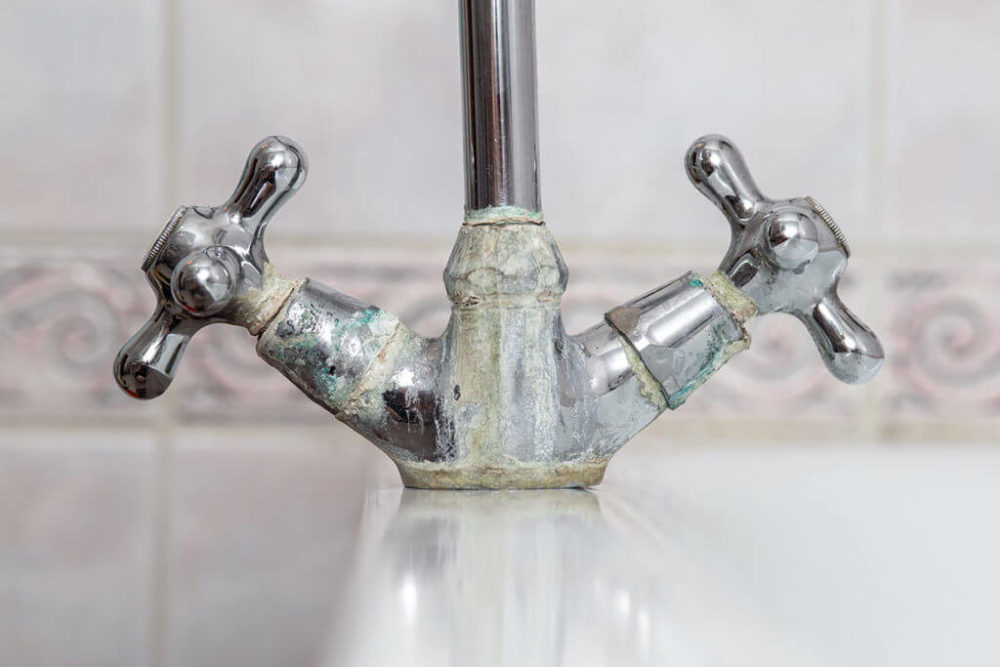
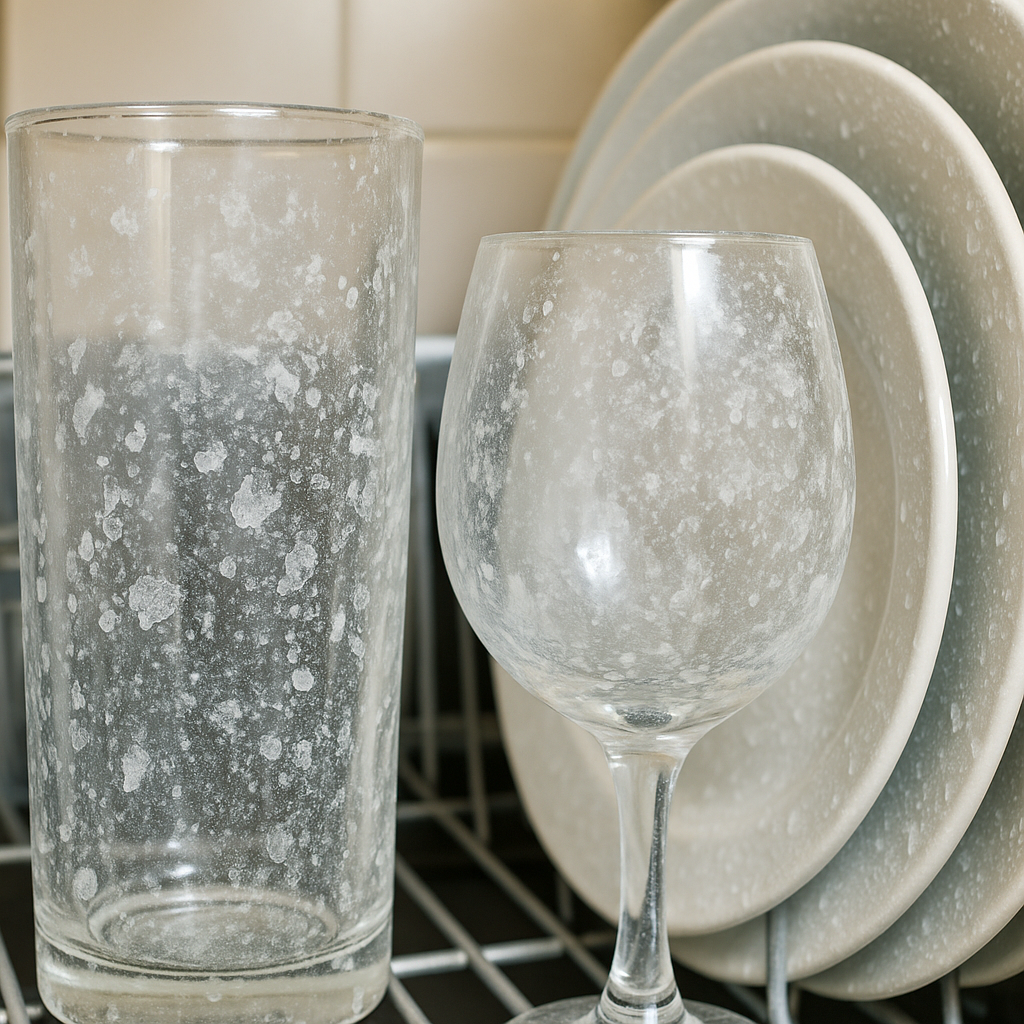
- Chalky white deposits on faucets, showerheads, and glassware
- Soap and shampoo that won’t lather well
- A dry, filmy residue on skin after showering
- Noticeably lower water pressure than a year ago
- Popping, rumbling, or whining noises from your water heater
- Rising gas or electric bills with no other explanation
How Hard Water Damages Your Pipes
Every time hard water passes through a pipe, it leaves behind a microscopic layer of calcium and magnesium. That layer doesn’t wash away — it hardens into scale that builds with every gallon that flows past it.
Narrowing pipe diameter
As scale accumulates, the interior diameter of the pipe shrinks. Less open space means less water flow, which shows up as weak pressure at your fixtures long before you’d ever suspect scale is the cause.
Full or partial blockages
Left alone, scale can build up enough to block a line almost entirely, especially at elbows and fittings where flow already slows down naturally.
Faster corrosion in older pipe materials
Homes with galvanized steel supply lines are especially vulnerable — mineral buildup accelerates internal corrosion, and once a galvanized line starts failing from the inside, patch repairs rarely hold for long.
Need it fixed now?
If you’re already seeing low pressure or hearing knocking pipes, don’t wait for a leak. Call Grig Plumbing at (983) 218-4929 for a same-week inspection — licensed, insured, and based right here in the Denver metro.
How Hard Water Damages Your Water Heater
Your water heater takes the worst of it. Heat accelerates mineral precipitation, so scale forms faster inside a water heater than almost anywhere else in your plumbing system.
In tank-style units, minerals settle at the bottom and form a hardened layer between the burner or heating element and the water itself. That layer acts like insulation — the unit has to run longer and burn more energy to heat the same amount of water, and the sediment layer is usually the source of the popping or rumbling noise you hear during a heating cycle.
Tankless units aren’t immune either. Without a tank to collect sediment, scale instead builds directly on the heat exchanger, reducing efficiency and, in bad cases, triggering error codes or full system failure.
Left unaddressed, this shortens the realistic service life of a water heater by years and raises the odds of an early, unplanned replacement. If you’re already hearing popping noises or losing hot water pressure, it’s worth scheduling water heater repair in Denver before the sediment layer causes permanent damage.
Hard Water vs. Softened Water: Side-by-Side
| Factor | Hard Water (Denver Tap) | Softened Water |
|---|---|---|
| Typical hardness | ~7.8 GPG citywide average | Under 1 GPG |
| Pipe scale buildup | Continuous, worsens with heat | Minimal to none |
| Water heater lifespan | Shortened by sediment buildup | Extended, fewer flushes needed |
| Soap & detergent use | Higher, poor lather | Lower, rinses clean |
| Energy cost to heat water | Rises as scale insulates elements | Stays consistent over time |
Denver Neighborhoods Most at Risk
Hard water hits every Denver home, but older neighborhoods with original galvanized steel supply lines feel it fastest. Areas like Park Hill, Stapleton, and parts of Capitol Hill still have homes running on galvanized piping installed decades before water softening was standard — and that pipe material corrodes far faster once scale starts forming inside it.
If your home was built before the 1960s and you haven’t had your supply lines inspected, hard water is very likely accelerating wear you can’t see from the outside of the pipe.
What to Do About It: Plumbing in Denver, CO Solutions
You have three practical paths, depending on how far along the damage already is:
- Install a whole-home water softener. This is the only fix that addresses the mineral content itself rather than just the symptoms. Installation typically runs a half-day for a licensed technician.
- Flush your water heater annually. Regular flushing clears loose sediment before it hardens into a solid layer, extending the unit’s working life.
- Get your pipes inspected if you’re in an older home. If you’re seeing pressure loss or noisy pipes, a professional inspection can catch pipe leak repair in Denver needs before a scale-narrowed line fails outright. Combining this with routine drain cleaning in Denver, CO keeps mineral deposits from compounding with other buildup in your lines.
According to the EPA’s guidance on water hardness, hardness itself isn’t a health hazard, but it is classified as a nuisance mineral issue affecting plumbing and appliances — which lines up with what Denver homeowners see firsthand.
Get a straight answer on your water.
Grig Plumbing tests your home’s hardness level and gives you a clear recommendation — no upsell, no guesswork. Call (983) 218-4929 to schedule.
FAQ
Is Denver’s water hard?
Yes. Denver’s citywide average sits around 7.8 grains per gallon, which qualifies as hard water, with some areas of the metro testing significantly higher depending on local supply lines.
Does hard water damage water heaters?
Yes. Minerals settle and harden inside the tank or on the heat exchanger, insulating heating elements, raising energy costs, and shortening the unit’s overall lifespan.
Can hard water damage pipes?
Yes. Scale buildup narrows the interior of pipes over time, reducing water pressure and, in older galvanized lines, accelerating corrosion that can lead to leaks or full blockages.
How do I know if I have hard water?
Look for white mineral crust on faucets, soap that won’t lather, dry skin after showering, and gradually dropping water pressure. A professional test gives you an exact GPG reading.
Does a water softener help with hard water?
Yes, it’s the most effective fix. A softener removes calcium and magnesium before they ever reach your pipes or appliances, typically bringing hardness under 1 GPG.
How often should I flush my water heater in Denver?
Given Denver’s mineral load, an annual flush is recommended — more often if you already notice popping noises or reduced hot water output. If flushing doesn’t resolve it, that’s usually a sign you need water heater repair in Denver rather than routine maintenance.
Who handles hard water plumbing in Denver, CO?
Licensed local plumbers who understand Denver’s specific hardness levels and older neighborhood pipe materials are your best option. Grig Plumbing tests hardness on-site and recommends fixes suited to your home’s actual plumbing, not a generic solution.
About Grig Plumbing
Grig Plumbing is a licensed and insured plumbing contractor serving Aurora and the greater Denver metro area [CONFIRM: years in business/service area details]. We handle everything from water heater repair to full pipe replacement for homes dealing with Denver’s hard water.