Corrosion works quietly. It wears pipes down from the inside, and by the time you see a stain on the ceiling, the damage has often been building for years.
As a plumber serving Aurora, CO, I get calls every week from homeowners who found one odd symptom and wondered if it meant something bigger. Sometimes it does. This guide shows you the signs of corrosion in plumbing systems, what each one means, and what to do when you spot them.
In This Article
What Causes Corrosion in Plumbing
Corrosion is a chemical reaction between the pipe material and the water inside it. Over time, the metal thins, flakes, or develops tiny holes.
A few things speed it up:
- Age. Every pipe material has a limit.
- Water chemistry. Hard water leaves scale. Water that is too acidic can eat at the pipe wall.
- Mixed metals. When two different metals touch, one can corrode faster. Plumbers call this galvanic corrosion.
- Fast-moving water. High velocity wears down the inside of pipes, especially at bends.
- Constant moisture. Pipes in damp crawl spaces can rust from the outside in.
You can’t see most of this happening. That’s why the signs below matter.
Signs of Corrosion in Your Water
Your water is often the first place corrosion shows up.
Rusty, brown, or yellow water
Brown or orange water usually means iron or steel pipes are breaking down. If it clears after a minute of running the tap, the problem may be limited to one section. If it shows up at every faucet, it’s likely widespread.
Blue-green tint
A blue-green tint can point to copper breaking down. It’s most noticeable after water sits in the pipes overnight.
Metallic taste or odd smell
A metallic taste can mean metal is leaching into your water. A rotten-egg smell has other possible causes, such as bacteria or a water heater issue, so it doesn’t always mean corroded pipes. Either way, have it checked.
Sediment in faucets and fixtures
If you keep finding grit in your aerators, or your fixtures clog more often than they used to, flakes from inside the pipes may be breaking loose.
Signs of Corrosion You Can See on Pipes
Take ten minutes to check the pipes you can reach. Look in the basement, utility room, under sinks, and around the water heater.
- Rust streaks or flaking metal on steel or iron pipes
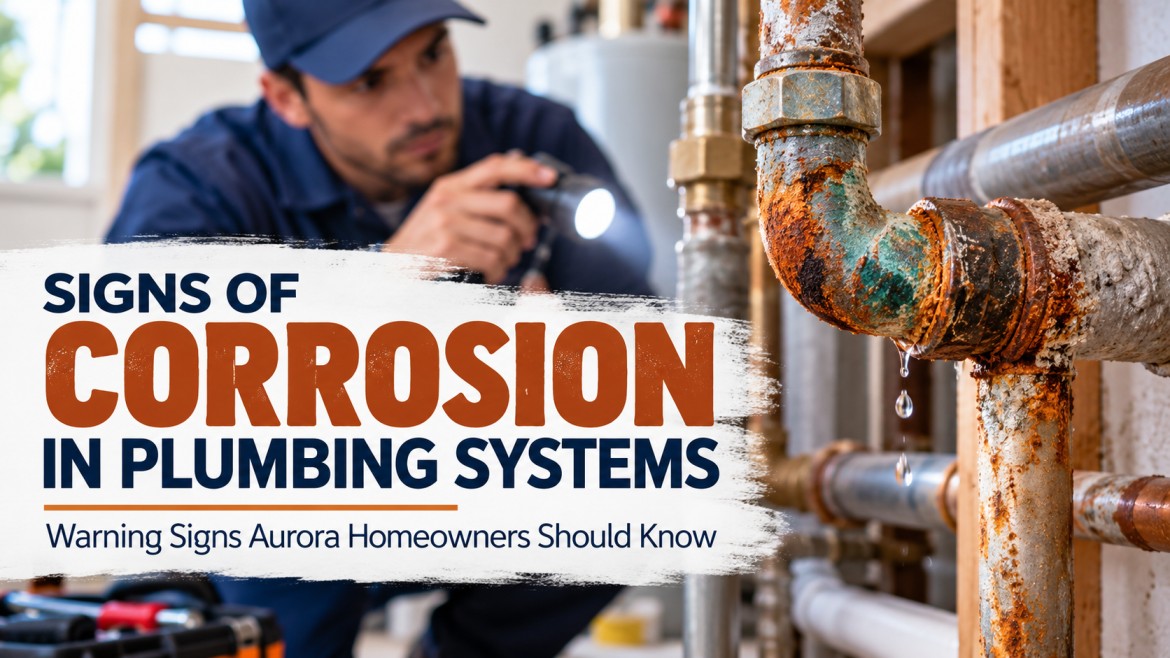
- Green or blue crust on copper pipes and joints
- White, chalky buildup on fittings, which is often mineral scale
- Bumps, pimples, or dimples on the pipe surface
- Dark or discolored patches where the pipe looks different from the rest of the line
- Rust near the water heater base, connections, or relief valve
Surface rust on a pipe often means deeper corrosion underneath. Our guide to water heater warning signs covers what else to watch for near your tank.
Seeing more than one of these signs?
Grig Plumbing is licensed and insured, and we serve homeowners across Aurora, CO. We’ll inspect your pipes, show you what we find, and give you a written price before any work starts.
Signs of Corrosion in Pressure, Leaks, and Bills
Water pressure that keeps dropping
Rust and scale narrow the inside of a pipe. Less space means less flow. A slow, steady drop across the whole house is a classic sign, especially in older homes.
Pinhole leaks and repeat leaks
Pitting corrosion creates small, deep holes in the pipe wall. These leaks can be tiny and easy to miss. If you fix one leak and another appears nearby a few months later, the pipe itself is failing.
Stains, damp spots, and musty smells
Brown stains on ceilings, warped flooring, or damp baseboards near plumbing can point to a slow leak from a corroded pipe. A musty smell may mean moisture is trapped behind a wall.
A higher water bill with no change in use
If your bill climbs and your habits haven’t changed, a hidden leak could be the reason. Corroded pipes are a common source.
New noises or temperature swings
Banging, whistling, or sudden hot and cold changes can have several causes. Corrosion is one of them, especially when it shows up alongside other signs on this list.
What Corrosion Looks Like by Pipe Type
Different pipes fail in different ways. Knowing what you have helps you know what to watch for.
| Pipe Material | Common Corrosion Sign | What It Usually Means |
|---|---|---|
| Galvanized steel | Brown water, falling pressure | Pipes are rusting and narrowing from the inside |
| Copper | Pinhole leaks, blue-green deposits | Pitting or joint corrosion |
| Cast iron (drain lines) | Rust streaks, cracks, slow drains | The pipe wall is thinning |
| Brass fittings and valves | Crusty deposits, stuck or leaking valves | Wear at a single fitting or valve |
Plastic pipes like PEX don’t rust, but their metal fittings can still corrode. If you’re not sure what’s in your walls, we can identify it during an inspection.
Corrosion in Aurora Homes
Aurora has a wide mix of housing, from older neighborhoods to newer builds. The age of your home tells you a lot about what’s behind your walls.
- Older homes may still have original galvanized steel supply lines or cast iron drains.
- Mid-age homes often have copper, which can develop pinhole leaks over time.
- Homes built before 1986 may have lead solder on copper joints. The U.S. Environmental Protection Agency has guidance on lead in drinking water, including how to test your water.
Water quality matters too. Hard water leaves scale inside pipes and can speed up wear. We explain how in our post on how hard water wrecks pipes and water heaters.
What to Do When You Spot the Signs
Don’t wait for a leak to decide for you. Here’s the order I’d follow:
- Write down what you see. Note where it shows up and when. Take photos of any rust, crust, or stains.
- Check your water meter. Turn off all water in the house. If the meter still moves, you likely have a hidden leak.
- Don’t ignore a single sign. One symptom may be minor, but it’s the best time to get it checked.
- Book an inspection. A plumber can confirm what’s causing the problem and how far it has spread.
If a hidden leak is the concern, our leak detection in Aurora, CO finds the source without opening walls unnecessarily. If the pipes are worn throughout, we’ll explain whether plumbing repiping in Aurora, CO is worth considering, and you’ll see the full price before we start.
For anything else, our team provides full plumbing services in Aurora, CO for homes and businesses.
Frequently Asked Questions
What are the first signs of corrosion in plumbing systems?
The earliest signs are usually rusty or discolored water, a slow drop in water pressure, and a metallic taste. You may also see green or white buildup on fittings. These often show up before any leak, so they’re worth acting on.
How do I know if my pipes are corroded inside?
You can’t see inside the pipe, but the clues show up elsewhere. Brown water, falling pressure, repeat leaks, and stained or flaking pipes all point to internal corrosion. A plumber can confirm it with an inspection and pressure testing.
Is corroded pipe dangerous?
It can be. Corroded pipes can leak, burst, and cause water damage or mold. Depending on the material and age, they may also release metals into your water. If you suspect lead, test your water and follow EPA guidance.
Does rusty water mean my pipes are corroded?
Often, yes, but not always. Rust-colored water can come from your pipes, your water heater, or the city main. If it only happens at the hot tap, the water heater may be the source. Have a plumber check to be sure.
Can I fix corroded pipes myself?
You can tighten a loose fitting or replace a small valve. You can’t reverse corrosion inside a pipe. Rust and pitting need a repair or replacement, and a poor DIY patch can hide a bigger problem until it floods.
When should I call a plumber about corrosion?
Call as soon as you notice rusty water at several faucets, pressure that keeps dropping, or more than one leak in a year. Also call if you see flaking pipes or wet spots on walls or ceilings. Early inspections cost far less than water damage.
Stop guessing what’s happening inside your pipes.
Grig Plumbing is licensed and insured, serving homeowners across Aurora, CO. We inspect, explain what we find in plain terms, and give you written pricing before we start.
About Grig Plumbing
Grig Plumbing is a licensed and insured plumbing contractor serving Aurora, CO and the surrounding area. We handle leak detection, pipe repair, repiping, water heaters, drain cleaning, and everyday residential and commercial plumbing.